
Diversity in engineering schools: inspiring career paths that are changing the game

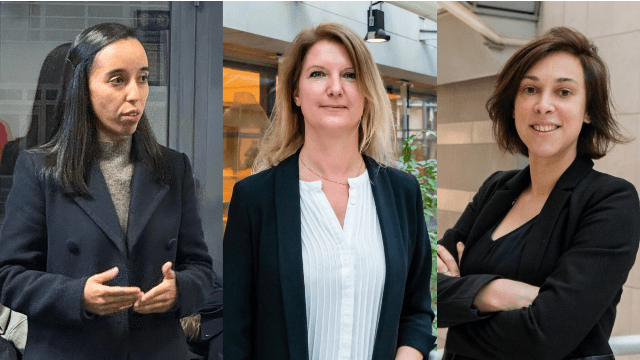
On Tuesday, December 16, the issue of gender diversity and the place of women in engineering training and professions was the focus of a dedicated talk, bringing together committed leaders from the Pôle Léonard de Vinci, Alumni, and students. Through their unique and sincere experiences, the speakers highlighted the persistent barriers, but also the concrete levers for promoting equal opportunities.
Understanding mechanisms of exclusion, starting in the classroom
Cécile Frankart, Deputy Director of ESILV, opened the discussion with a testimony rooted in her academic and research background. In biology, girls are in the majority, but the gender balance disappears at the doctoral level, revealing a structural deficit in female representation in research.
She highlighted the forms of self-censorship, particularly among young girls, often associated with "imposter syndrome". In her view, a system can only be solid and sustainable if it is designed by all levels of society.
Having been involved for several years with the association Elles Bougent, which has been working for 20 years to promote gender diversity in scientific and technical fields, she emphasized the importance of fundamental work starting with education. One observation remains mysterious: in some societies, technical fields have more women, which directly calls into question cultural and educational traditions.
Taking concrete action for equal opportunities
Cécile Gaston, Head of Partnership Development and Fundraising at Pôle Léonard de Vinci, who has been involved in equality, diversity, and inclusion issues since 2019, presented the actions that have been implemented. These include La Cordée Mona Lisa, workshops on gender stereotypes, and the organization of an equality day—on March 18—designed as an immersion experience to “live experiences and put oneself in the other's shoes.”
She reiterated the essential role of partners, notably Elles Bougent, and the importance of creating strong female role models in the school, where girls now represent 24% of all student (ESILV), across all programs.
Dare, persevere, forge your own path
The speech by Imane Rached, who graduated in 2020 with a major in Mechanics, Digital Technology, and Modeling, specializing in Aeronautics, made a particular impression on the audience. Her initial dream was to become a pilot. Despite doors that were only half-open, failures—notably in the ENAC entrance exam—and numerous obstacles, she never gave up.
The only girl in her preparatory class for three years, then a student at ESILV while working at the same time, she had to seek out her work-study program in another region of France, far from everything, when others refused. Faced with doubts about her profile—too young—she chose not to let doubt take hold.
After a stint in the Oil & Gas sector during the Covid crisis, she joined Dassault in Bordeaux, then Air France, where she is now Equipment Contracts Manager. Her message is clear: there is no single model for success, and no one has to prove that she deserves her place.
Encouraging change in trajectories
Finally, Chloé, a third-year work-study student, shared a powerful testimony about the impact of other people's perceptions. With a degree in Electrical Engineering and Industrial Engineering, she was one of four girls in a class of 200 boys.
For a long time, no one really asked her what she was interested in. Initially skeptical, her teachers eventually encouraged her and enrolled her in competitions. The result: French champion in her first year, then gold medalist at WorldSkills in her second year—the world's largest competition for both professionals and students. In 30 years, no other girl had won this title in her category.
Her arrival at ESILV in September2025 marked a turning point: it was the first time she had been explicitly encouraged to continue in engineering.
A single message: making possibilities visible
Beyond the diversity of backgrounds, one common thread emerged: diversity cannot be imposed, it must be built. Through education, representation, encouragement, and concrete action.
This talk served as a reminder of how the way young girls are viewed can transform their trajectories, and how essential it is to continue opening up the realm of possibilities so that engineering schools fully reflect the society they help to build.

Comments0
Please log in to see or add a comment
Suggested Articles