
Aurélie Le Calvez (ESILV 2018), Senior Consultante at Avanade

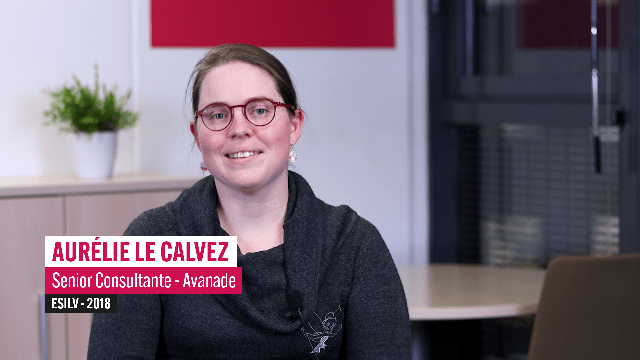
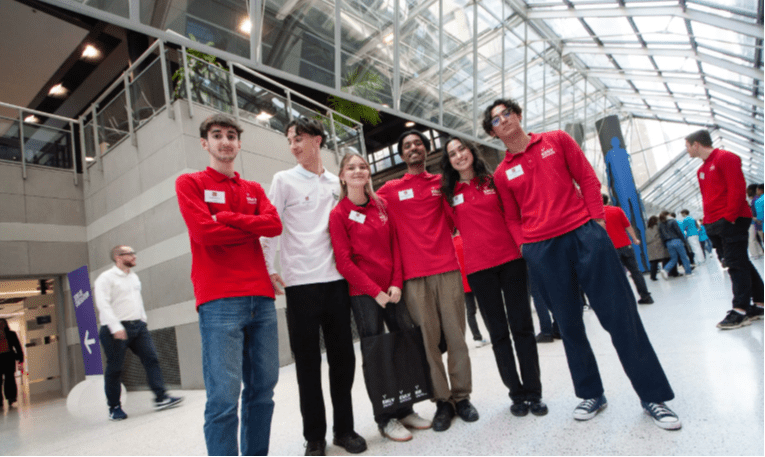
Aurélie Le Calvez, who graduated from ESILV in 2018, returned to campus for the 2025 Alumni Fair. Having built her entire career at Avanade, she looks back on a career rich in developments, spanning technology, consulting, and project management. Drawing on the skills she acquired at school—from continuous learning to soft skills—Aurélie shares her vision of the consulting profession and offers inspiring advice to those who wish to follow this rapidly changing path.
What are the three main stages of your career?
Well, this is something that I think is quite rare, but I've gained all my experience in business within the same company! So if I had to name three main stages, they would actually be three different positions within the company.
The first was a very technical role, not as a software developer, but not far off. Then I moved into a more consulting role, which involved more interaction with clients and business users. I also started supervising a few people. And finally, my current position, which is more of a project manager role with three different responsibilities: technical responsibility for the application I'm working on, team management, monitoring and managing the project's implementation.
How did your studies at ESILV contribute to who you are today?
When I arrived at ESILV, I remember being told that “college is about learning how to learn.” And indeed, today, in the world of IT, things are changing so quickly: we have new versions of software every six months, so you have to constantly learn new things and keep your technical knowledge up to date.
And then, of course, how can we not mention all the projects and soft skills, especially with all the cross-disciplinary weeks? Today, I interact with teams that are very different, and all these interactions with different profiles from IIM and EMLV are a very good experience that is useful to me all the time.
Can you tell us about your job? What aspects do you particularly enjoy?
The job of an IT consultant is extremely broad. It involves helping and supporting companies in the use of their information systems. We have teams that specialize in all aspects of a project's life cycle, from describing the requirements in requests for proposals, to providing change management support once the project is complete and delivered.
For my part, I specialize more in software engineering. My role is to analyze the business needs that are reported to me, propose appropriate solutions, and support the implementation of these solutions. So I act as a link between the business teams and the technical teams. I ensure that the right choices are made and support the entire project implementation process.
Each day is unique, and so is every request! The technical challenges are always different because the technical world is constantly evolving. Our clients' needs in the field vary across all sectors, from construction to finance to luxury goods, so naturally, things change every day. There's no such thing as routine!
What challenges are you facing right now?
In the world of IT, it's AI, of course! So that's a pretty significant growth factor. It presents opportunities that we can seize with our customers, but it's also a tool that we need to learn to master and use responsibly, and that's not always easy in today's world.
What are the key factors for success in this profession? Any advice for getting started?
In consulting, once you have all the technical background, the differentiating factor is actually the human aspect. So the key factors are really empathy, but also knowing how to take other points of view into account and adapt your own perspective and thinking. It's about knowing how to compromise with your client.
Any advice? Any experience is good experience! Students often come to me looking for internships in their third or fourth year: in consulting, it's quite complicated. Doing internships or projects in companies known as end-user companies—companies that sell their products directly to customers, not consulting firms—allows you to refine your business knowledge and work on being able to adopt multiple points of view and gain knowledge about the needs of these core businesses, which is also very important in consulting.
What does being Alumni mean to you?
Being Alumni is a bit unusual because you become one without really choosing to, as soon as you graduate. At the same time, I think that as Alumni, we can choose to get more involved in the school we came from. I really enjoyed my years here, so if I can give something back to the students, I'm happy to do so.
In fact, I participate (as a jury member) in the cross-disciplinary Hackathons. And every time, it's really interesting. The students have some really ingenious ideas, which also forces us to stay curious, broaden our horizons, and discuss these topics with them.
Ultimately, the Alumni community is a network with which we share a common culture. It's like LinkedIn, but a little more selective. It makes it easier to connect with other people and other environments.
An Alumna to follow!

Comments0
Please log in to see or add a comment
Suggested Articles